

Bleached Teeth: Everything You Need to Know About Teeth Whitening
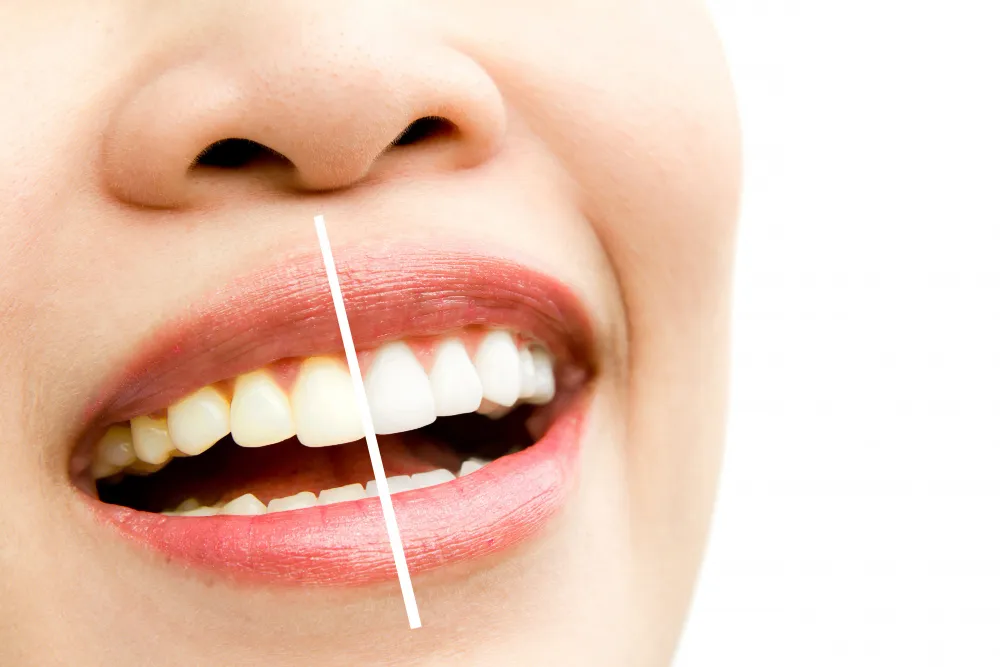
A bright, white smile is often considered the universal symbol of health, youth, and confidence. In a city like Dubai, where first impressions are paramount, the quest for "bleached teeth" has become one of the most sought-after cosmetic dental treatments. But what does the process actually involve, and is it the right choice for your dental health?
At Magnum Clinic, we believe that a beautiful smile starts with an informed patient. In this comprehensive guide, we dive deep into the science, methods, and clinical benefits of teeth bleaching to help you decide how to best achieve that pearly-white glow.
What is Teeth Bleaching?

Teeth bleaching is a chemical process used to lighten the natural color of your teeth without removing any of the tooth surfaces. While many people use the terms "whitening" and "bleaching" interchangeably, there is a technical difference. "Whitening" refers to restoring a tooth’s surface color by removing dirt and debris, whereas bleached teeth are achieved through a process that changes the actual shade of the enamel using oxidative agents.
The goal is to break down internal and external stains caused by aging, lifestyle habits, or certain medications, resulting in a smile that is several shades lighter than its original state.
Why is Teeth Bleaching Popular?
The surge in popularity of bleached teeth isn't just about vanity; it’s about the psychological and social impact of a radiant smile.
- Enhanced Aesthetics: Whether it’s for a wedding, a job interview, or a social event, a brighter smile instantly enhances your overall facial aesthetics.
- Confidence Boost: Many patients report a significant increase in self-esteem and a greater willingness to smile in photos and social settings after treatment.
- Anti-Aging Effect: As we age, our enamel thins and the yellowish dentin underneath becomes more visible. Bleaching can effectively "turn back the clock" on your smile’s appearance.
How Teeth Bleaching Works
To understand how you get bleached teeth, you have to look at the microscopic structure of your enamel. Enamel is the hard, outer layer of your teeth, but it is actually porous.
The Chemistry Behind Teeth Whitening
The "magic" of bleaching lies in active oxygen molecules. Most professional bleaching products contain Hydrogen Peroxide or Carbamide Peroxide. When these agents are applied to the teeth, they break down into oxygen molecules that penetrate the porous enamel.
These molecules target chromogens—the complex organic molecules responsible for dark stains. By breaking the chemical bonds of these stains, the oxygen molecules dissipate the color, making the teeth appear significantly whiter. It is a deep-cleaning process that works from the inside out.
Different Methods of Teeth Bleaching
Achieving bleached teeth can be done through various delivery systems, depending on your goals and sensitivity levels:
- In-Office Professional Whitening: This is the gold standard. A high-concentration bleaching gel is applied by a dentist, often yielding dramatic results in just one hour.
- At-Home Kits (Professional Grade): Your dentist provides custom-fitted trays and a professional-strength gel for you to use at home over several days.
- Over-the-Counter (OTC) Products: These include generic strips or trays found in pharmacies. While accessible, they lack the precision and strength of clinical treatments.
Types of Teeth Bleaching Treatments
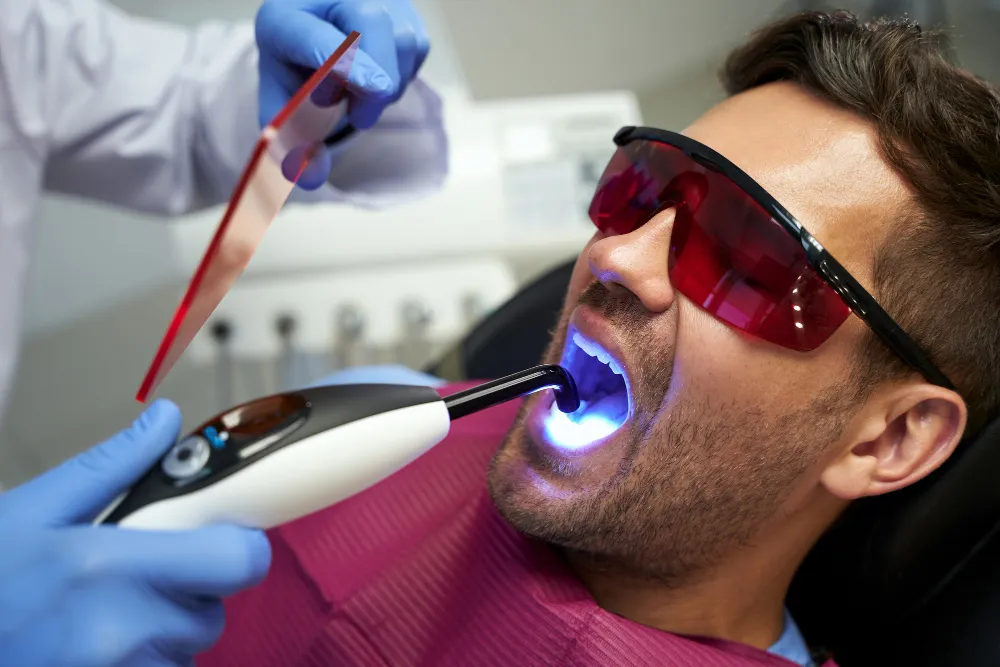
When choosing how to achieve bleached teeth, it is essential to understand the technology and techniques available at specialized centers like Magnum Clinic.
Professional Teeth Bleaching (In-Office)
In-office bleaching is the most efficient and safest way to brighten your smile.
- The Process: After protecting your gums with a specialized barrier, the dentist applies a high-concentration peroxide gel. This process is monitored closely to ensure maximum safety.
- Advantages: You get immediate, visible results (often 5 to 8 shades lighter) in a single visit. Because it is supervised by a dental professional, the risk of gum irritation or uneven whitening is virtually eliminated.
Over-the-Counter (OTC) Products
For those looking for a budget-friendly option, OTC products like whitening strips, paint-on gels, and whitening toothpastes are common.
- The Reality: While convenient, these products have a much lower concentration of bleaching agents. They are effective for removing surface (extrinsic) stains but rarely change the deep internal color of the tooth. Results are slower, and since trays aren't custom-fitted, there is a higher risk of the gel leaking and causing gum chemical burns.
Laser Teeth Whitening
Laser whitening is a premium subset of in-office bleaching. At Magnum Clinic, we utilize advanced light-activated technology to accelerate the bleaching process.
- How it works: A specialized light or laser is used to "activate" the whitening gel. This heat or light energy helps the peroxide penetrate the enamel faster and more effectively.
- The Result: It is the fastest method available, making it ideal for patients with busy schedules who want a "Hollywood Smile" in record time.
Benefits of Teeth Bleaching
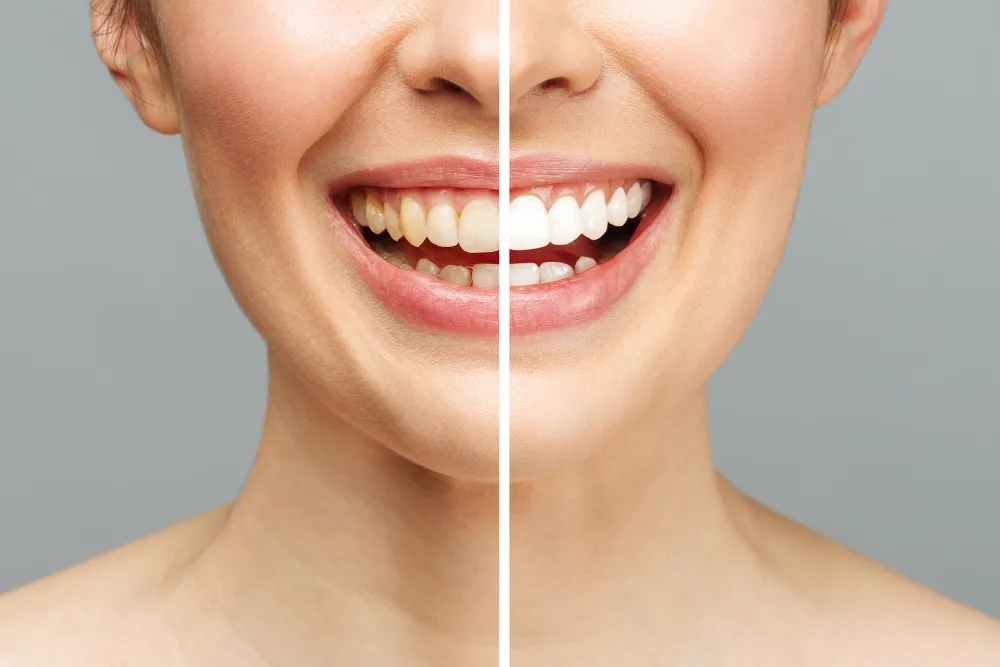
Choosing to have bleached teeth offers more than just a surface-level change; it provides a comprehensive upgrade to your personal brand and well-being.
- Improved Aesthetic Appearance: Over time, lifestyle choices like drinking coffee, tea, or red wine can dull your smile. Bleaching removes these deep-seated stains, resulting in a more youthful, "polished" look that complements your facial features.
- Significant Boost in Confidence: It is a well-documented psychological fact that when you feel good about your smile, you smile more often. This increased confidence can improve your social interactions, professional presence, and overall happiness.
- Non-Invasive Procedure: Unlike veneers or crowns, which require the removal of some natural tooth enamel, teeth bleaching is entirely non-invasive. You can achieve a dramatic transformation without any drilling or permanent alteration to the structure of your teeth.
Things to Consider Before Teeth Bleaching
While the prospect of a brighter smile is exciting, "bleached teeth" are not a one-size-fits-all solution. Preparation is key to a successful outcome.
- The Necessity of a Professional Consultation: At Magnum Clinic, every whitening journey begins with a thorough examination. We check for existing dental work (like fillings or crowns, which do not bleach) and ensure your gums are healthy enough for the procedure.
- Suitability for Sensitive Teeth: If you already suffer from tooth sensitivity, standard bleaching might cause temporary discomfort. However, this doesn't mean you can't whiten your teeth. We can adjust the concentration of the gel or use desensitizing agents to make the process comfortable for you.
- Addressing Current Dental Health: It is vital to treat any underlying issues, such as cavities or gum disease, before applying bleaching agents. Placing high-concentration peroxide on a decayed tooth can cause intense pain and damage to the dental pulp.
Potential Risks and Side Effects
When performed by professionals, bleaching is highly safe. However, being aware of potential side effects helps you manage your expectations.
- Temporary Tooth Sensitivity: The most common side effect of getting bleached teeth is a temporary "zing" or sensitivity to cold temperatures. This usually subsides within 24 to 48 hours after treatment.
- Gum Irritation: If the bleaching gel comes into contact with the soft tissues of the mouth, it can cause minor chemical burns or blanching (turning the gums white). This is why professional application, which uses protective barriers, is much safer than DIY kits.
- Risk of Over-Bleaching: Excessive use of whitening products can lead to "technicolor" teeth or a translucent, grayish appearance. It can also thin the enamel over time. Following a dentist-approved schedule is essential to maintaining the integrity of your teeth.
Aftercare for Bleached Teeth
The first 48 hours after your treatment are the "White Diet" phase. Because the pores in your enamel are slightly open, they are more susceptible to new stains.
- What to Avoid: To protect your newly bleached teeth, avoid "staining" substances such as:
- Dark liquids (Coffee, tea, red wine, and dark sodas).
- Highly pigmented foods (Beetroot, soy sauce, turmeric, and berries).
- Tobacco products (Smoking is the fastest way to reverse whitening results).
- Maintenance Tips: * Rinse your mouth with water after eating.
- Use a straw for colored beverages to minimize contact with your front teeth.
- Switch to a whitening toothpaste for maintenance, as recommended by your Magnum Clinic dentist.
How Long Do Bleached Teeth Last?
One of the most frequent questions we receive at Magnum Clinic is regarding the "shelf life" of a whitening treatment. While the results are impressive, they are not permanent.
- Longevity of Whitening Effects: Typically, the results of professionally bleached teeth can last anywhere from 6 months to 2 years. This timeframe varies significantly based on individual habits.
- Factors Affecting Longevity: * Dietary Habits: Frequent consumption of staining agents like caffeine or tannins will cause the brightness to fade faster.
- Oral Hygiene: Brushing twice daily and flossing ensures that surface stains don't settle into the enamel.
- Professional Cleanings: Routine scaling and polishing at the dentist help "refresh" the look by removing extrinsic debris that accumulates between whitening sessions.
Alternatives to Teeth Bleaching
Sometimes, bleaching isn't the most effective solution for every patient. If you have deep, intrinsic stains (like those caused by tetracycline) or structural issues, we may recommend alternative cosmetic options:
- Veneers and Bonding: Dental veneers are thin shells of porcelain placed over the front of the tooth. Unlike bleached teeth, veneers are resistant to staining and can correct the shape and alignment of your smile simultaneously. Dental bonding is a similar, more affordable option using composite resin.
- Whitening Toothpastes: While these won't change the internal color of the tooth like a professional bleach, they are excellent for maintaining results by scrubbing away daily surface stains.
Key takeaways: Should You Consider Bleaching Your Teeth?
The decision to pursue bleached teeth is a personal one, but it is undeniably one of the fastest and most cost-effective ways to revitalize your appearance. When done under professional supervision, it is a safe, non-invasive procedure that can provide a significant boost to your social and professional confidence.
However, the key to a successful outcome is a healthy foundation. By prioritizing a clinical consultation and following a structured aftercare plan, you can enjoy a radiant, Hollywood-ready smile that lasts.
Schedule Your Consultation Today
Ready to transform your smile? At Magnum Clinic, our dental experts utilize the latest whitening technology to ensure safe, stunning, and long-lasting results tailored to your unique dental needs.
Contact Magnum Clinic Dubai today to book your professional teeth whitening appointment!

Dr. Ashwath is a Senior Specialist at Magnum Clinic with two decades of clinical mastery. A Fellow in Prosthodontics and Cosmetic Dentistry, he combines advanced laser technology with a patient-first approach to create radiant, healthy smiles that last a lifetime.